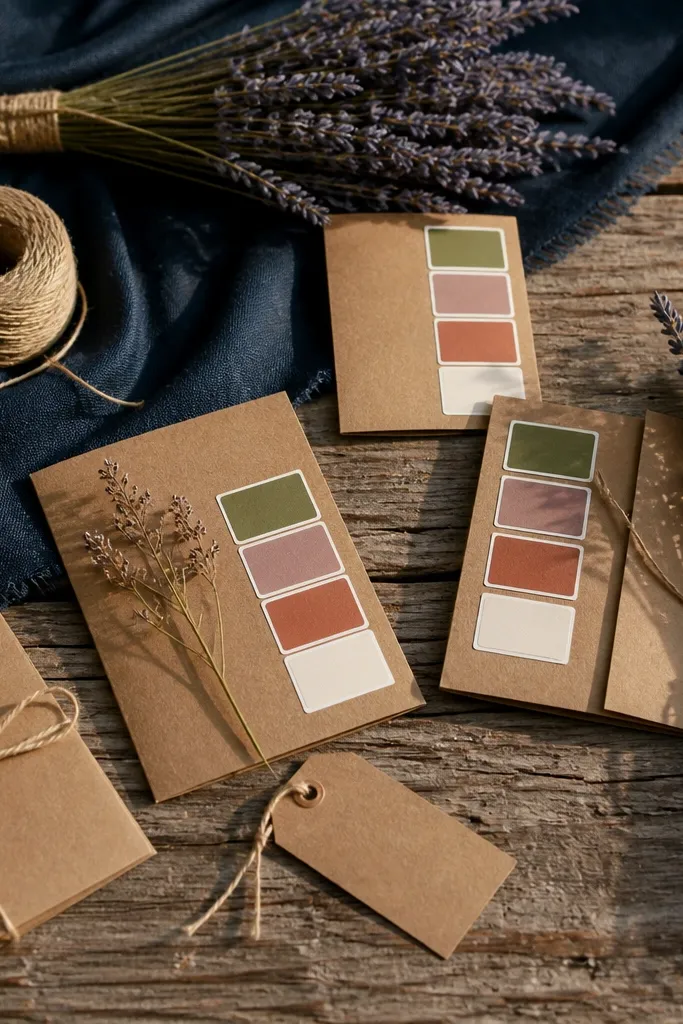
1. Oatmeal + Espresso + Burnt Orange

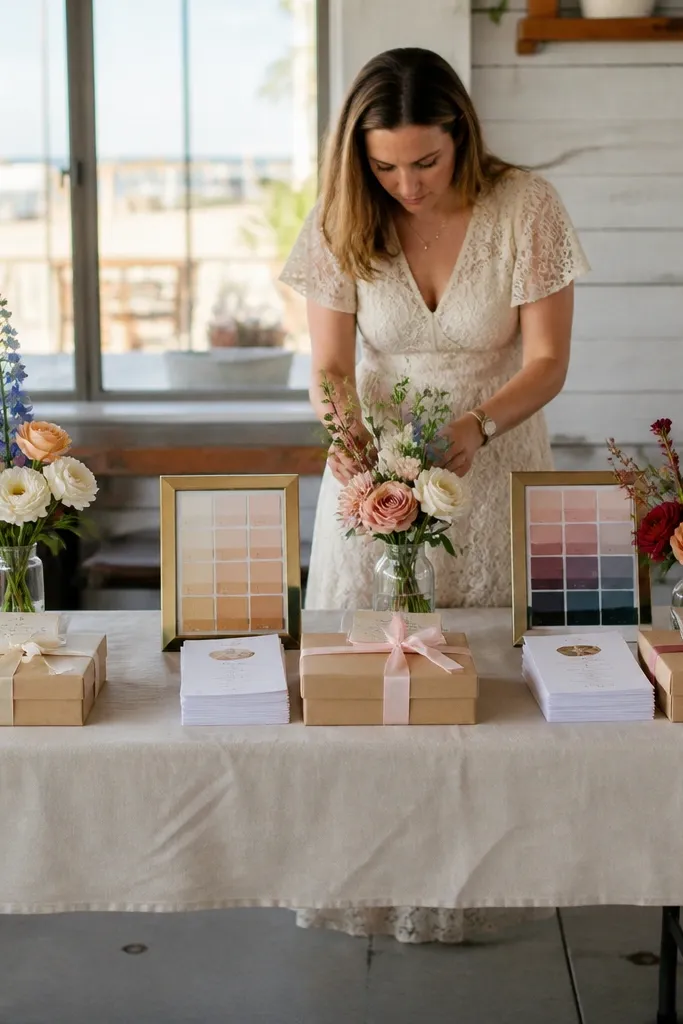
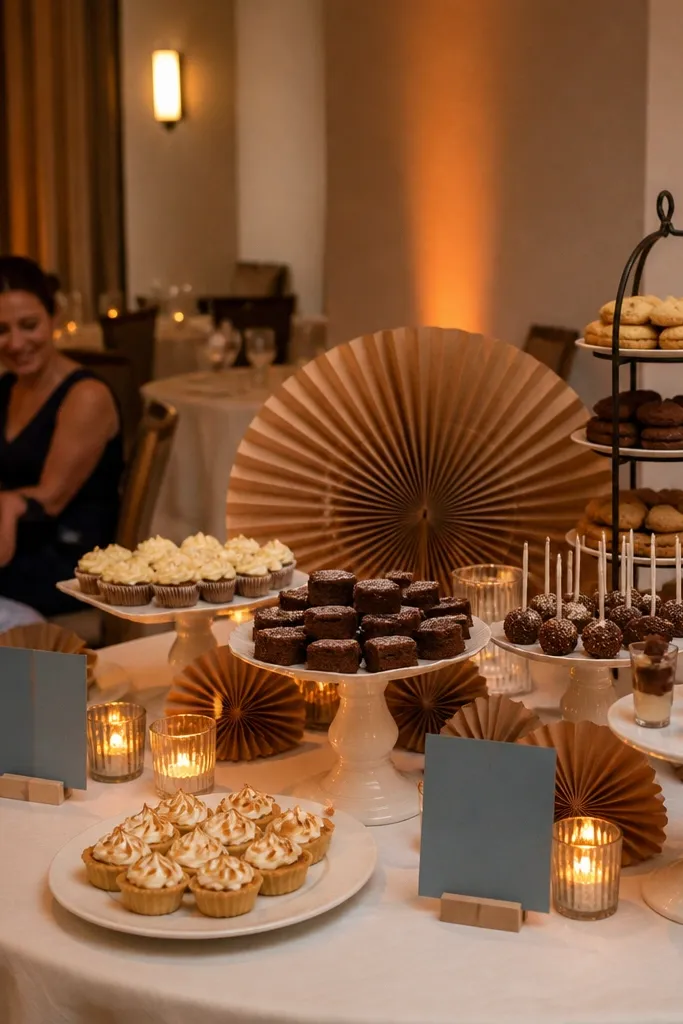
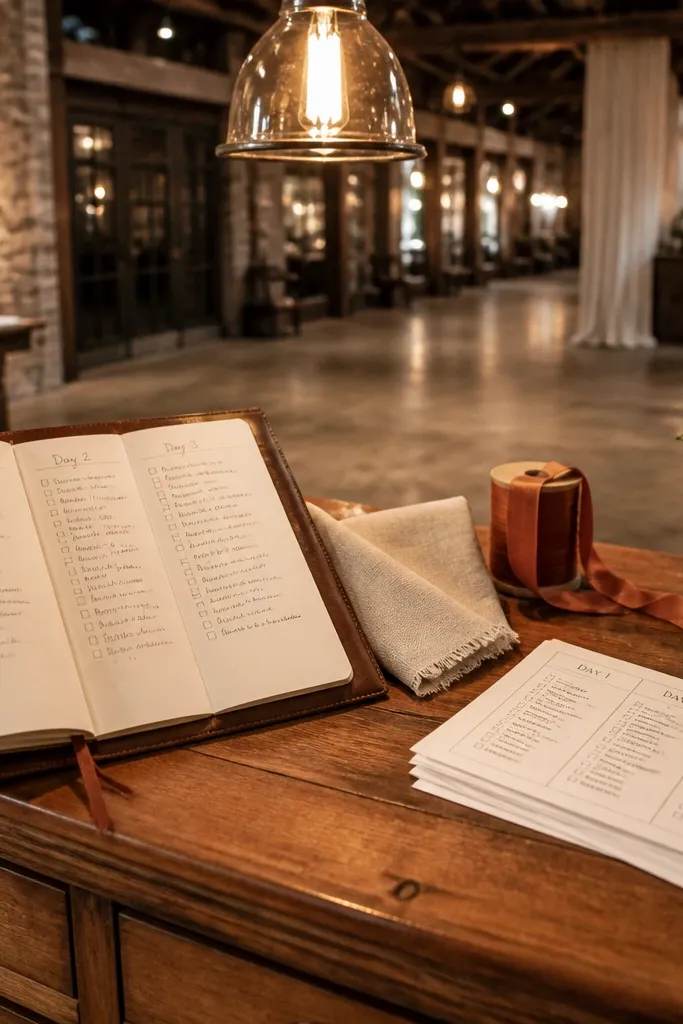
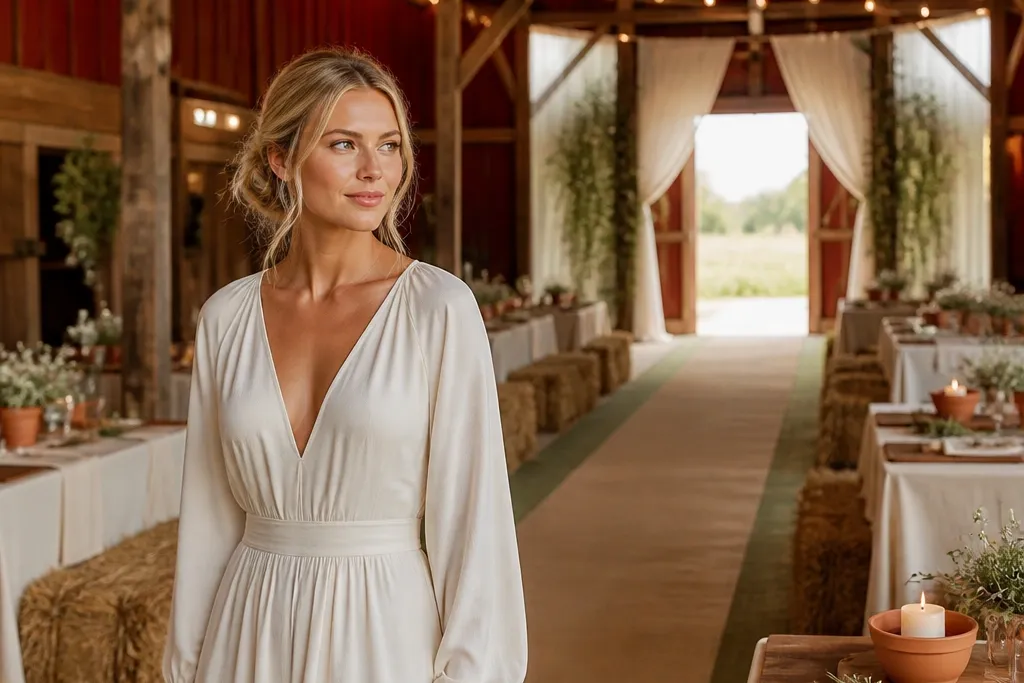
An earthy, high-contrast palette that channels the warmth of crisp autumn sunshine without veering into Halloween kitsch. Heavy oatmeal flax provides a luminous neutral surface that catches daylight, while deep espresso wood chargers and taper holders anchor the vertical lines of barn posts and rafters. Burnt orange acts as a rich, cinematic focal pop, glowing vibrantly under 2700K tungsten string lights and illuminating guest portraits with golden vitality.
Lay down unpressed oatmeal Belgian linen runners along exposed wooden farmhouse tables to create an instant reflective base. Introduce espresso through dark walnut chairs, charred oak place card blocks, and deep espresso taper candles set in bronze cups. Reserve burnt orange strictly for your floral arrangements—using a layered mix of autumn terrace roses, burnt orange chrysanthemums, and trailing dried persimmon branches. Ensure burnt orange constitutes no more than 25% of the visual space to keep the look sophisticated.
Source matte stoneware ceramics in oatmeal rather than glossy bright white china to prevent harsh strobe reflections in flash reception photography.
Do not mix in high-saturation tangerine or neon pumpkin tones; artificial orange shades instantly degrade the organic, rustic feel of espresso timber.
2. Cream + Pine Green + Gold Leaf
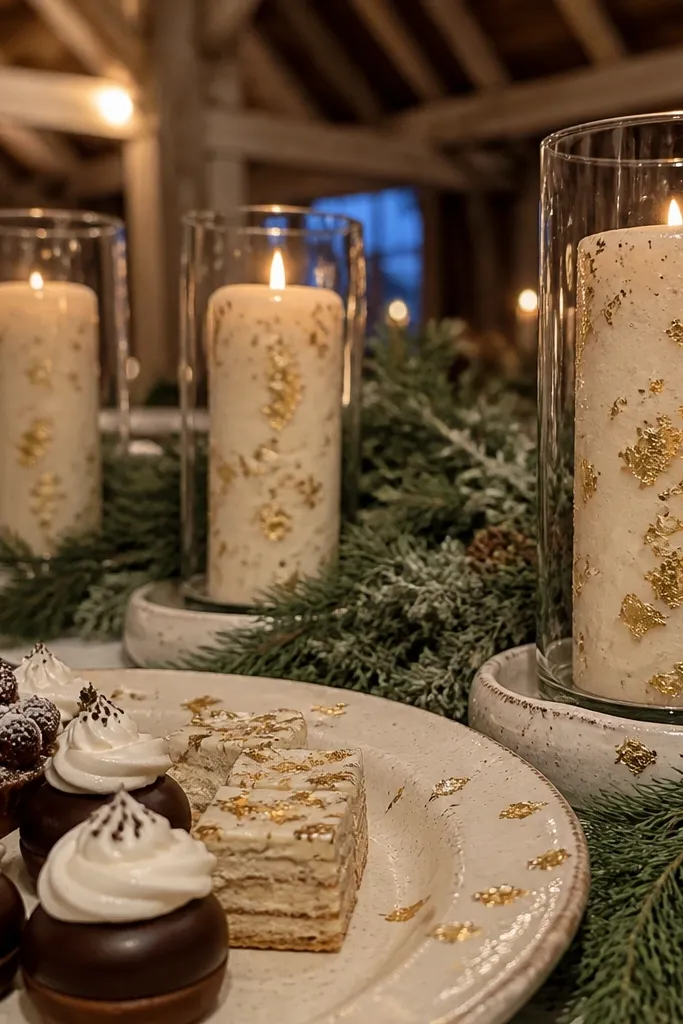
A regal, evergreen-centered rustic color scheme that brings botanical grandeur into rustic barns and mountain lodges. Pine green provides deep, shadowed organic structure, while rich cream drapery and candlelight soften the heavy architecture. Hand-applied gold leaf highlights catch the ambient glow of flickering fireplace hearths, transforming rustic barn wood into an intimate, black-tie woodland sanctuary.
Quick tipUse unlacquered brushed brass or antique gold leaf wax rather than mirror-shine electroplate to ensure the metallic elements look historic and organic.
Hang soft cream wool or crinkled cotton ceiling bunting to break up dark cedar trusses. Arrange lush runner garlands along long banquets featuring noble fir boughs, cedar fronds, and pine sprigs dotted with pinecones. Intersperse tapered cream beeswax candles along the foliage and introduce gold leaf on torn-edge deckled cotton menus, gold-leaf-rimmed glassware, and vintage brass urns. The gold leaf should remain a delicate micro-accent rather than a solid metallic wash.
Skip thisSteer clear of icy silver or cool blue-tinted greens; cold metallics fight with the natural warmth of timber beams and pine foliage.
3. Dusty Sage + Blush Rose + Oat Milk
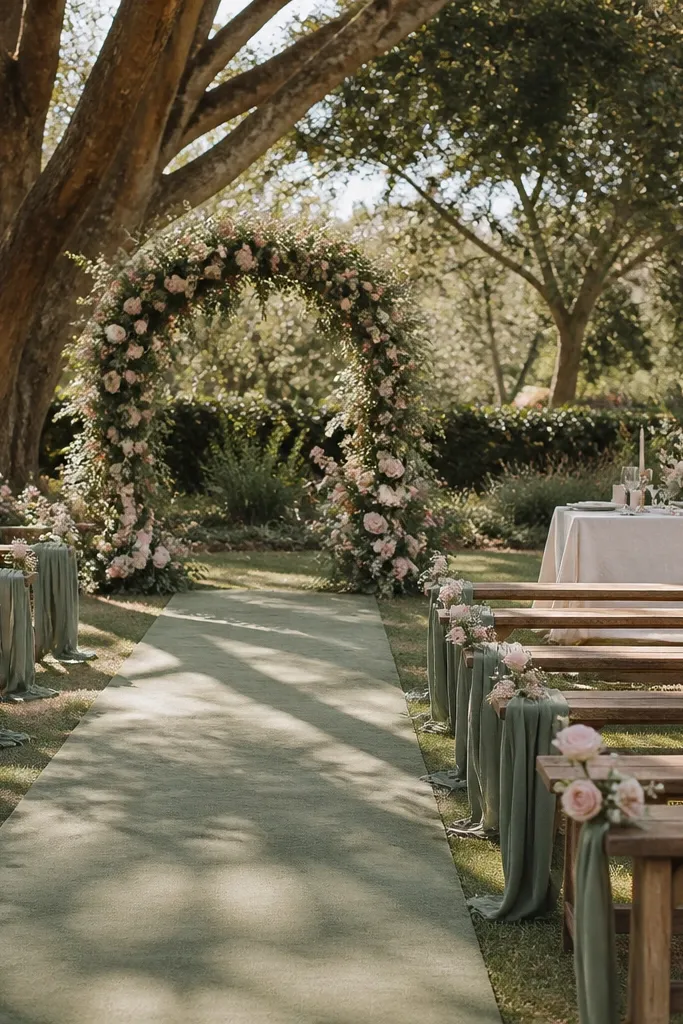
A gentle, romantic interpretation of rustic style designed specifically for open-air barn verandas and sunlit vineyard celebrations. Oat milk replaces harsh chalk white, delivering a warm dairy undertone that flatters midday sunlight. Dusty sage brings an earthy, muted leaf presence that prevents blush roses from reading too sweet or juvenile, establishing a serene, garden-inspired visual rhythm.
Outfit banquet tables with textured oat milk cotton runners laid directly over bare natural pine or bleached oak tops. Weave fresh spiral and seeded eucalyptus with silver dollar sage along the center. Cluster dusty blush garden roses, lisianthus, and pale pink ranunculus in ceramic compote vessels with low, sprawling silhouettes. Keep paper goods printed on soft oat milk cotton cardstock with charcoal serif typography.
Ensure your blush florals possess warm peach or dusty beige undertones rather than bubblegum pink to maintain aesthetic cohesion with rustic wood.
Never incorporate pure bleached white napkins; against oat milk and dusty sage, bright white fabric reads sterile and visually disruptive.
4. Terracotta + Natural Jute + Cream
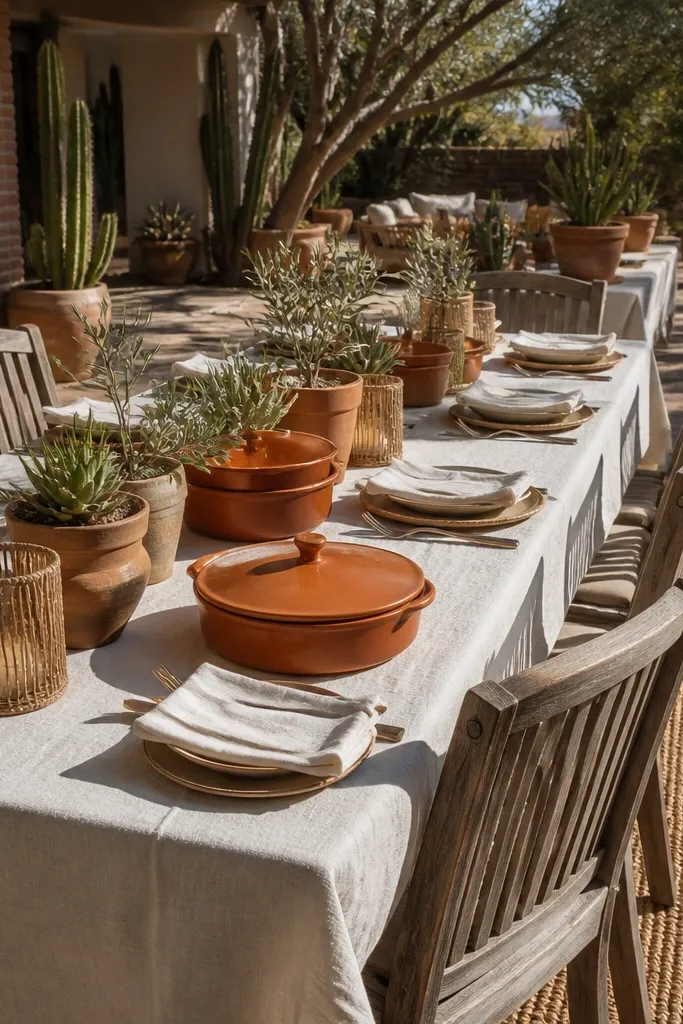
An artisan, earth-fired scheme celebrated for its tactile warmth and effortless desert-ranch charm. Cream linen provides an airy, expansive foundation, while raw terracotta vessels and baked clay pots infuse grounded Mediterranean warmth. Woven natural jute placemats and accents offer coarse, tactile dimension that feels organic, approachable, and impeccably curated.
Quick tipPre-soak your terracotta pots in water the night before if using fresh floral mechanics, or seal their interiors to keep dampness from seeping onto linens.
Begin with a cream textured tablecloth to establish a luminous baseline. Layer circular woven natural jute placemats at each guest setting, topped with matte bone ceramic dinnerware and cream flax napkins tied with jute cord. Down the center of the table, cluster assorted raw terracotta pots filled with garden spray roses, dried strawflowers, bleached bunny tails, and sun-baked grasses. Integrate terracotta taper candles in low clay holders.
Skip thisDo not introduce synthetic burlap runners with plastic-reinforced edges; authentic woven jute mats deliver superior texture without shedding fiber dust.
5. Rust + Charcoal + Warm Ivory
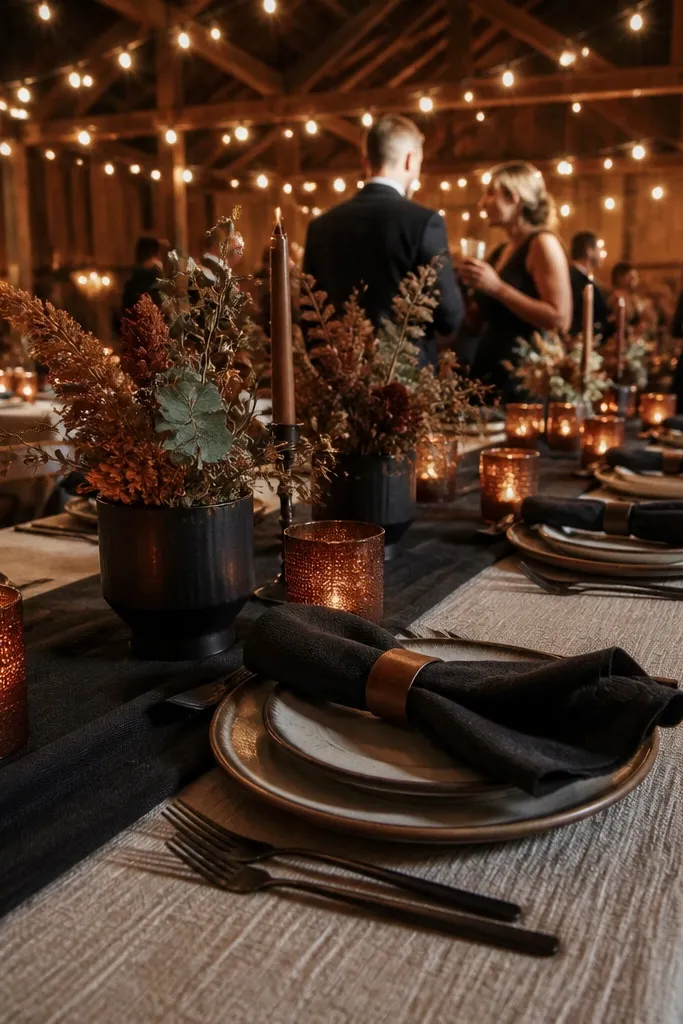
A moody, cinematic rustic palette that thrives in converted mill buildings, industrial barns, and evening receptions. Warm ivory linens reflect ambient candlelight, preventing shadowy venue corners from swallowing your tables. Deep rust florals add smoldering warmth that flatters all skin tones in photography, while matte charcoal hardware introduces contemporary architectural bite.
Drape long dining tables in heavyweight warm ivory slub linen. Form a structural centerpiece spine using matte charcoal wrought iron candelabras fitted with ivory and charcoal tapers. Intersperse low charcoal compotes brimming with rust-colored dahlias, terra-cotta roses, copper beech foliage, and dried amaranth. Use torn-edge charcoal menus letterpressed with warm ivory ink at each place setting.
Opt for cast iron or blackened steel with a matte powder-coat finish to eliminate unwanted flash glare from camera lighting kits.
Avoid using true pitch black paint or glossy jet plastics; charcoal possesses subtle softness that harmonizes far better with aged barn timber.
6. Moss Green + Oatmeal + Antique Brass
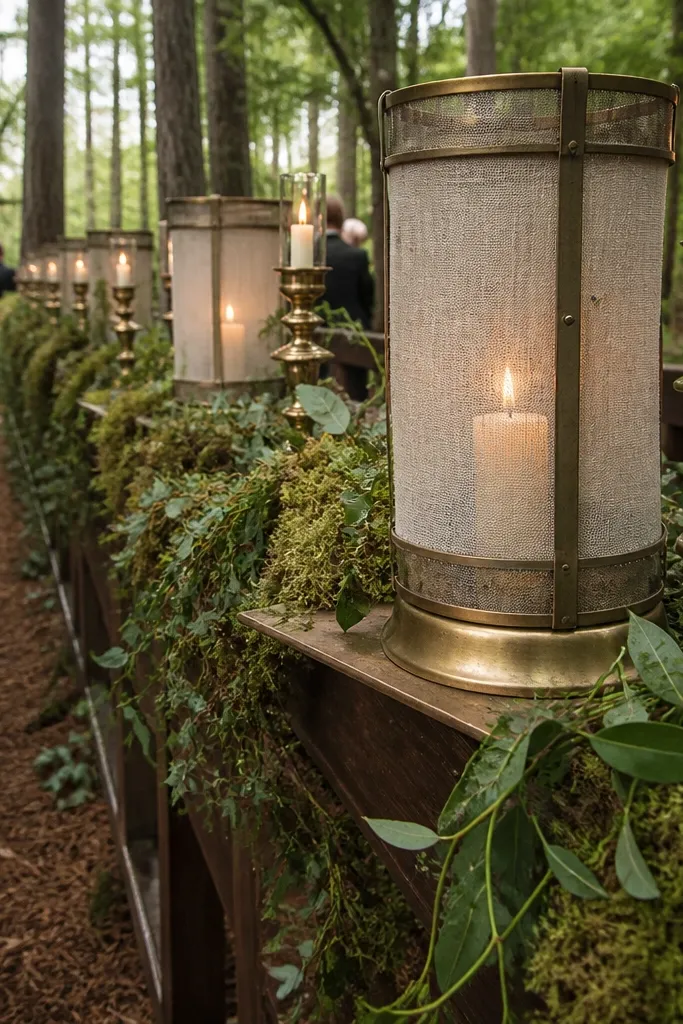
An organic, woodland-inspired masterpiece that mimics the lush floor of an ancient forest. Oatmeal textiles provide an earthy, breathable surface that softens the heavy presence of wood beams. Moss green foliage and velvet ribbons bring vibrant botanical life, while antique brass candelabras inject an heirloom patina that glows under golden hour illumination.
Lay heavyweight oatmeal linen tablecloths along dining tables. Build low, rambling centerpieces featuring preserved reindeer moss, maidenhair ferns, velvet-leaf anthuriums, and wild olive branches. Intersperse antique brass chamberstick holders bearing warm ivory tapers at varying heights. Tie each guest menu with a 1-inch torn moss green velvet ribbon for an unexpected sensory accent.
Thrift authentic vintage brass candlesticks throughout planning; the slight variations in age and tarnish create an organic, collected-over-time character.
Do not mix in bright emerald or Kelly green ribbons; moss green relies on muted, yellow-green undertones that clash with cool synthetic greens.
7. Dusty Plum + Cream + Walnut Brown
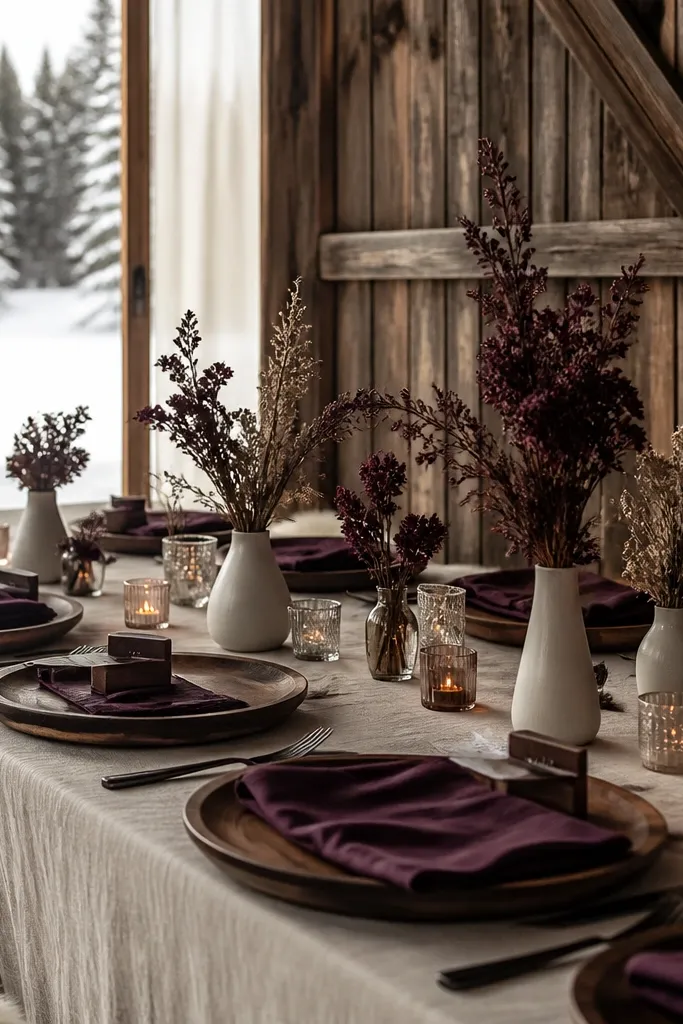
A rich, vineyard-inspired rustic palette that exudes aristocratic country warmth. Cream linens and taper candles provide essential luminescence, preventing dark barn spaces from feeling enclosed. Dusty plum brings mysterious, wine-soaked depth through velvety petals and silk ribbons, while reclaimed walnut chargers ground the setting with rugged architectural gravitas.
Cover tables in natural cream linen and place solid walnut wooden plate chargers at every seat. Anchor centerpieces with creamy garden roses, deep plum ranunculus, dark purple scabiosa, and trailing dark autumn grape leaves arranged in low smoked glass compotes. Pair with plum-colored raw silk ribbon tied around bridal bouquets and hand-calligraphed cream place cards mounted on walnut wood blocks.
Use dusty plum dahlias or chocolate cosmos rather than saturated purple carnations to achieve an editorial, high-end botanical look.
Avoid pairing plum with cool ash gray fabrics; gray undertones cancel out plum’s rich warmth and create a washed-out appearance in dim lighting.
8. Sand Beige + Olive + Chocolate
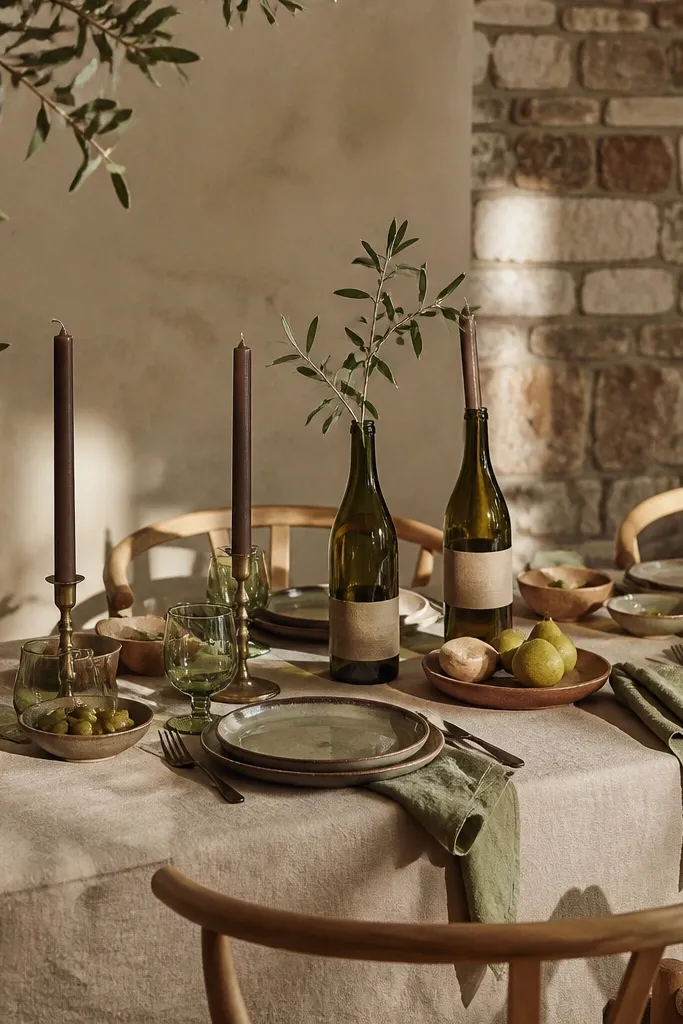
A tranquil Mediterranean-rustic fusion that blends the breezy warmth of coastal country estates with grounded agrarian roots. Sand beige offers a neutral base that feels sun-warmed and relaxed. Silvery olive foliage introduces timeless botanical softness, while rich dark chocolate stoneware and taper candles provide the contrast needed to make neutral tables pop in camera frames.
Choose sand beige linen tablecloths with a subtle slub weave. Down the table center, lay continuous loose garlands of silvery fruiting olive branches, intermingled with white garden spray roses and seeded greenery. Introduce chocolate brown matte ceramic plates, paired with smoked amber water tumblers and deep chocolate beeswax taper candles. Keep stationery printed on warm kraft or handmade sand paper.
Incorporate potted dwarf olive trees wrapped in natural jute sacks at the entrance of your barn to establish the color story upon guest arrival.
Do not add canary yellow or bright lemon accents; keep the focus strictly on muted olive, sand, and deep chocolate for an organic agrarian mood.
9. Cinnamon + Oat Milk + Soft Black
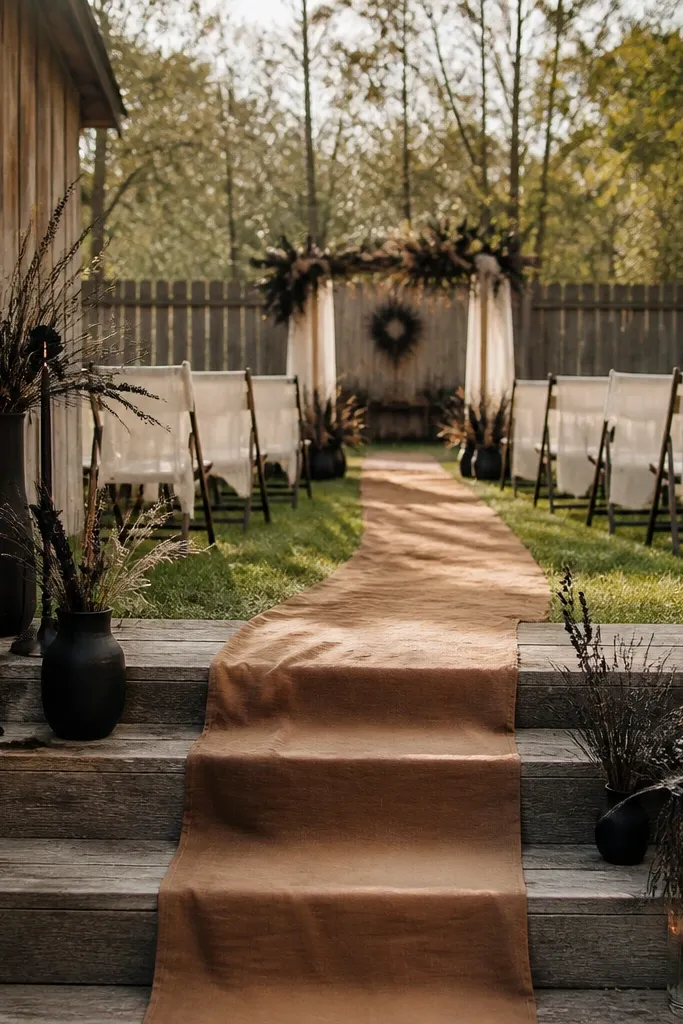
A contemporary, spice-infused rustic palette that brings modern editorial edge to historic timber spaces. Oat milk linen creates a soft, luminous background that reflects candlelight, while fiery cinnamon floristry introduces cozy autumn vitality. Structural soft black accents in iron flatware and slim taper holders give the setting crisp, tailored definition.
Drape tables in fluid oat milk cotton runners that puddle gracefully onto the floor. Create dynamic floral arrangements using cinnamon roses, copper amaranth, dried rust palms, and deep bronze chrysanthemums in low matte black ceramic vessels. Pair with modern soft black flatware, smoked black wine glasses, and slim black taper candles. Finish each napkin fold with a single tied cinnamon stick.
Light real cinnamon tapers or place cinnamon sticks near fireplace mantels to engage your guests' olfactory senses as they enter the reception.
Do not use high-gloss lacquered black acrylic; modern rustic design demands matte, powder-coated, or hand-forged soft black finishes.
10. Red Clay + Cream + Weathered Wood
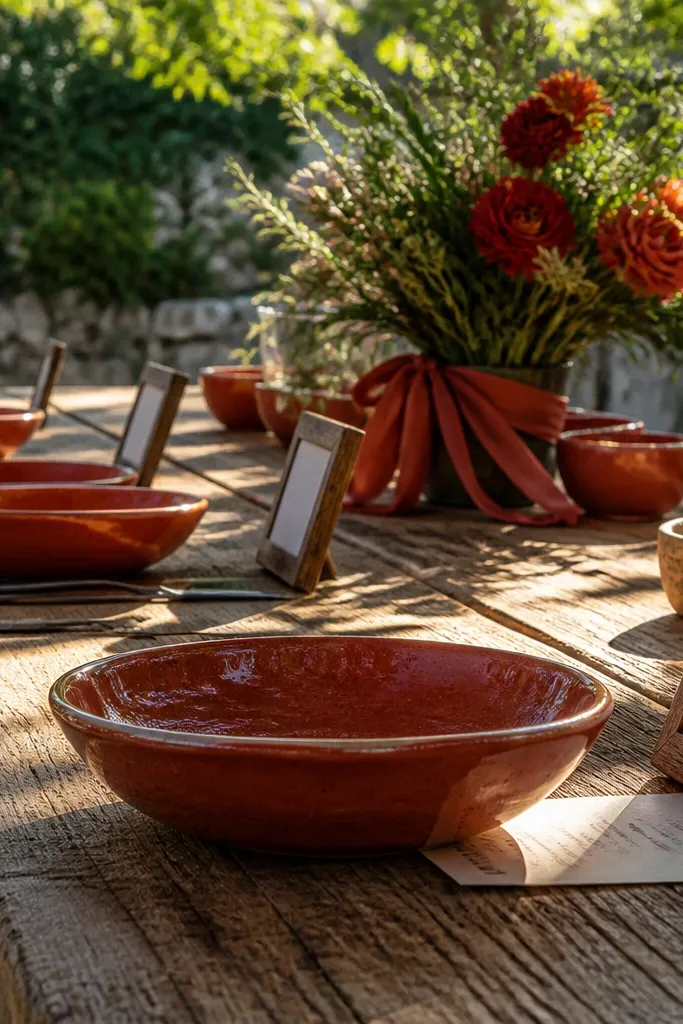
An earthy, sun-baked rustic aesthetic honoring handcrafted ceramic craftsmanship and reclaimed barn timber. Weathered gray-brown farm tables display authentic rustic grain, while cream napkins and floral highlights bounce light back into the scene. Red clay brings saturated mineral richness that looks sensational in late-afternoon golden hour photographs.
Leave weathered wood tables exposed to showcase their natural grain and patina. Center tables with hand-thrown red clay bowls and vessels holding creamy white garden roses, quicksand roses, dried yarrow, and wild grasses. Incorporate red clay tile place cards hand-lettered with cream calligraphy. Fold cream washed linen napkins across ceramic dinner plates.
Visit local artisan potters to commission unique red clay bud vases; couples can gift them to bridal party members as enduring wedding keepsakes.
Avoid pairing red clay with bright primary reds; ensure all pottery and floral accents remain within the burnt sienna and baked terracotta color family.
11. Charcoal + Ecru + Dried Pampas Feathers
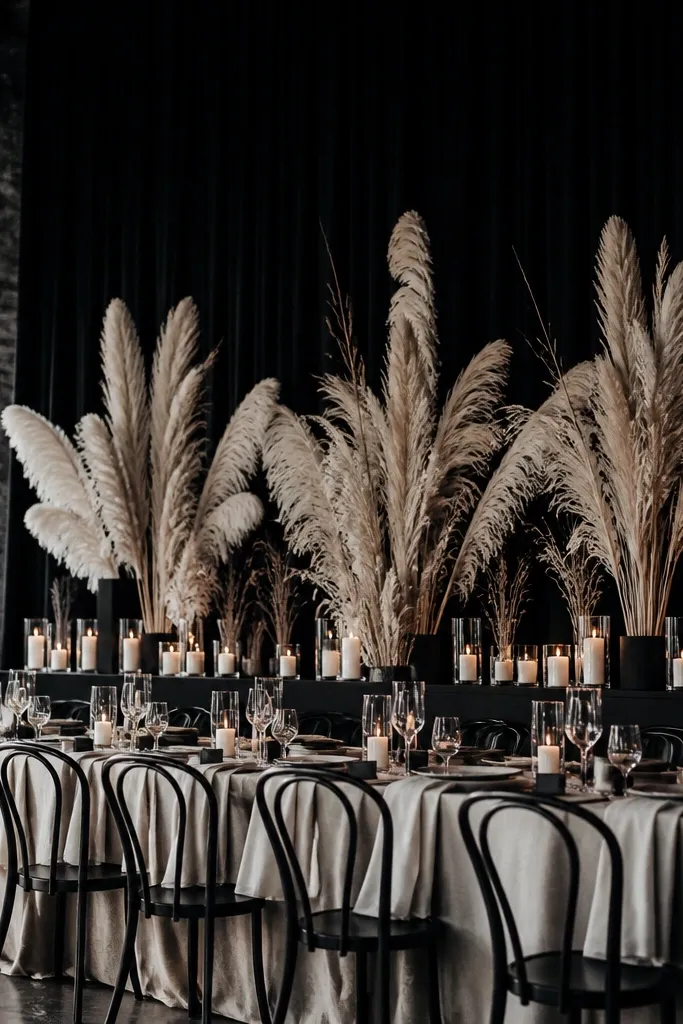
A minimalist, bohemian-rustic scheme tailored for open meadows, coastal ranches, and industrial barn conversions. Ecru brings soft, unbleached cotton warmth, while dramatic dried pampas plumes add monumental vertical volume and tactile motion. Charcoal structural accents provide the contemporary punch that prevents all-beige dried arrangements from looking lifeless.
Erect a ceremony arch framed with matte charcoal steel piping, anchored by cascading clusters of natural ecru pampas grass, bleached ruscus, and dried palm spears. On reception tables, lay ecru gauze runners over bare timber. Intertwine small bundles of fluffy pampas plumes with matte charcoal candle holders and charcoal dinner menus. Utilize ecru handmade deckle-edge paper for place cards.
Lightly mist pampas grass plumes with non-aerosol hairspray outdoors before setting them on tables to prevent fluffy seeds from shedding into dinner plates.
Do not use artificially dyed pink or bleached-white pampas grass; stick strictly to natural sandy-ecru plumes for authentic rustic elegance.
12. Chai Brown + Cream + Terracotta Rose
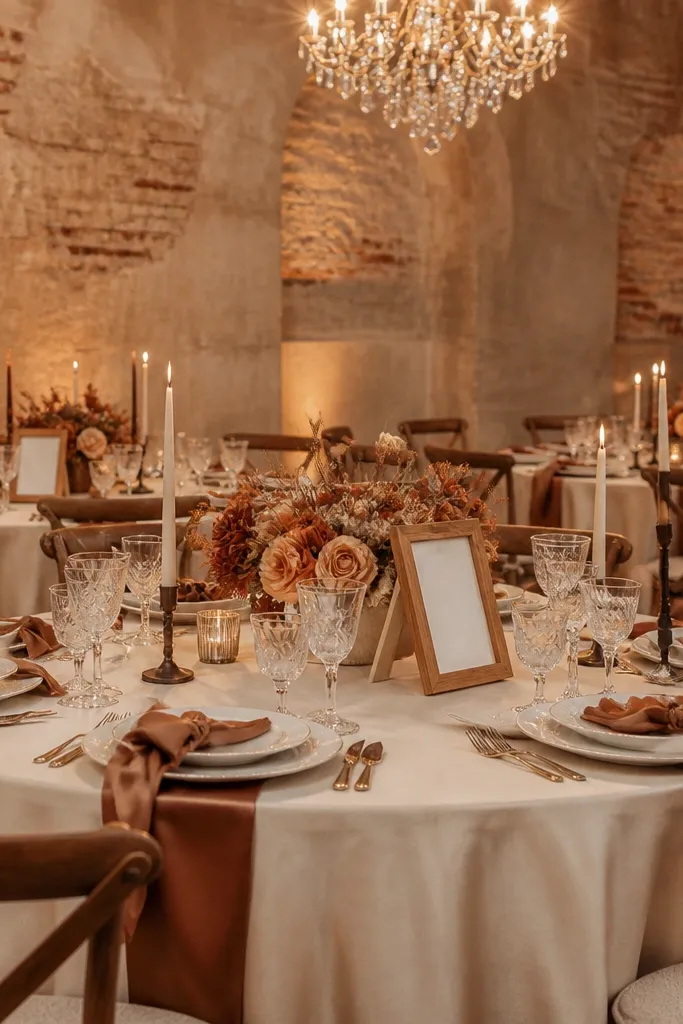
A velvety, romantic rustic color scheme reminiscent of warm artisanal beverages and fireside gatherings. Cream linens and taper candles provide radiant light, while warm chai brown accents in leather and silk ground the scene with understated luxury. Terracotta rose blooms offer a nuanced, antique floral tint that photographs gorgeously across daylight and candlelight.
Outfit guest tables in rich cream flax linens. Position low stoneware compotes filled with terracotta roses, cafe au lait dahlias, dried carmel eucalyptus, and trailing jasmine vines. Introduce chai brown through genuine leather tag place cards, hand-dyed chai silk bouquet ribbons, and amber glass votive holders that cast a warm caramel radiance across place settings.
Source naturally dyed plant-based silk ribbons steeped in black tea or chai spices to achieve that perfectly imperfect, organic gradient tone.
Steer clear of muddy mustard yellows; preserve the delicate, romantic equilibrium between warm chai brown, creamy ivory, and terracotta rose.
13. Sage + Wheat Gold + Ivory Crochet
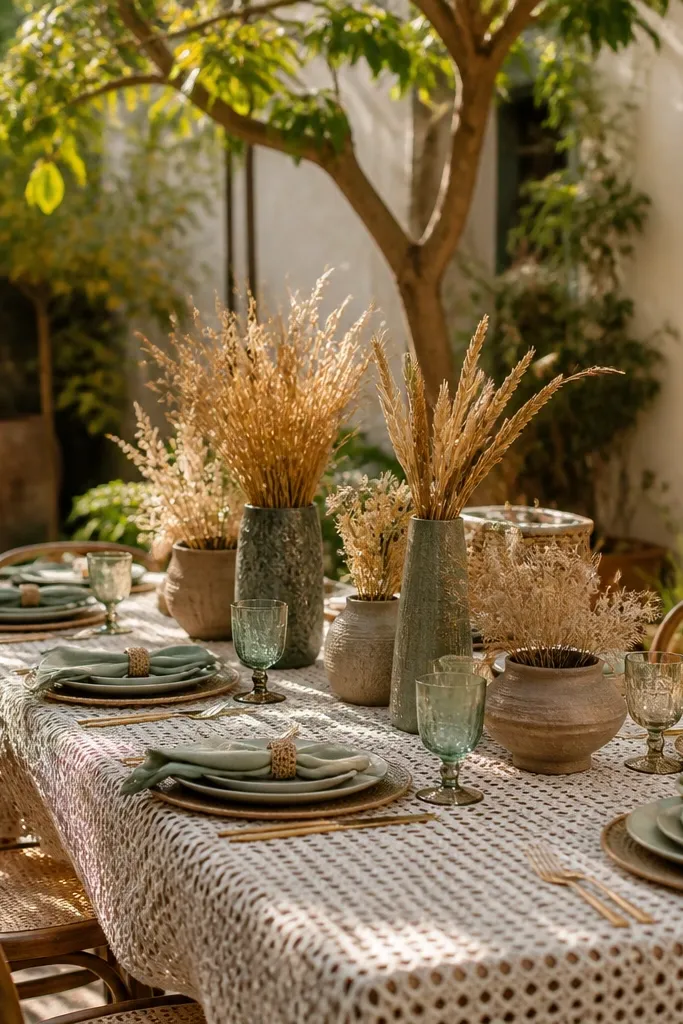
A nostalgic harvest-rustic aesthetic capturing the golden warmth of late-summer prairie afternoons. Ivory crochet runners introduce vintage artisan texture that feels intimately familial, while soft sage greenery keeps the table feeling fresh and botanical. Sun-ripened wheat gold adds harvest warmth, catching afternoon sunlight through barn windows with breathtaking brilliance.
Lay vintage-style ivory crochet or macrame lace runners down long wooden harvest tables. Cluster sage-colored ceramic bud vases filled with culinary sage foliage, eucalyptus, and pale white blooms. Complement with bundles of sun-dried wheat stalks tied with sage velvet ribbon. Dot tables with warm brass candleholders holding ivory beeswax tapers.
Steam your crochet runners thoroughly before setting the room; crisp, flat lace patterns show delicate textural detail in close-up ring and tablescape shots.
Do not pair this palette with bright turquoise or cool aqua; wheat gold requires soft, muted greens like sage to maintain its vintage countryside mood.
14. Evergreen + Cranberry + Creamy Burlap
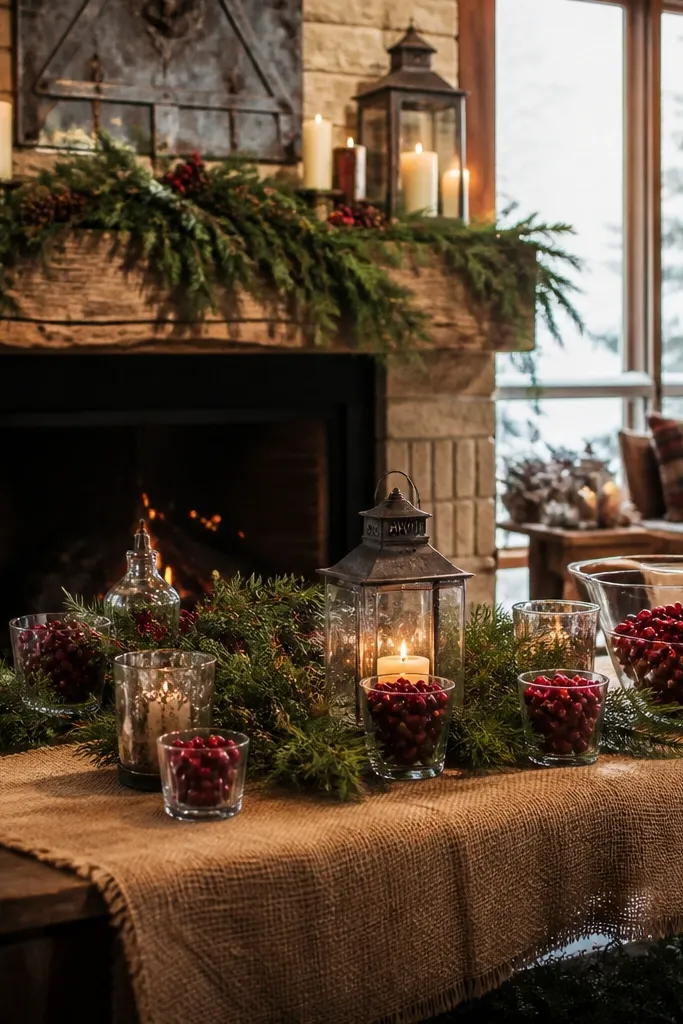
The quintessential winter rustic wedding color scheme, evoking cozy mountain lodges and alpine snowscapes without looking like a holiday party. Creamy washed burlap delivers softened, tactile farmhouse charm, while fragrant evergreen boughs create lush textural depth. Rich cranberry red injects a jewel-toned fruit pop that cuts through snowy winter landscapes.
Drape long tables in washed and softened creamy burlap or heavy flax canvas. Build sprawling central garlands using balsam fir, cedar, and blue spruce boughs. Nest fresh cranberry stems, hypericum berries, and deep burgundy-cranberry garden roses into the pine needles. Accent the setting with tall cream pillar candles housed in rustic glass hurricane lanterns.
Search specifically for 'washed flax burlap' or bleached jute; it possesses a soft, pliable hand-feel and creamy tone completely free of scratchy fibers.
Avoid using plastic-coated fake berries or candy-cane reds; rely on natural fresh cranberries, dark winter peonies, and authentic winterberry stems.
15. Black Tea + Tan Linen + Burnished Gold
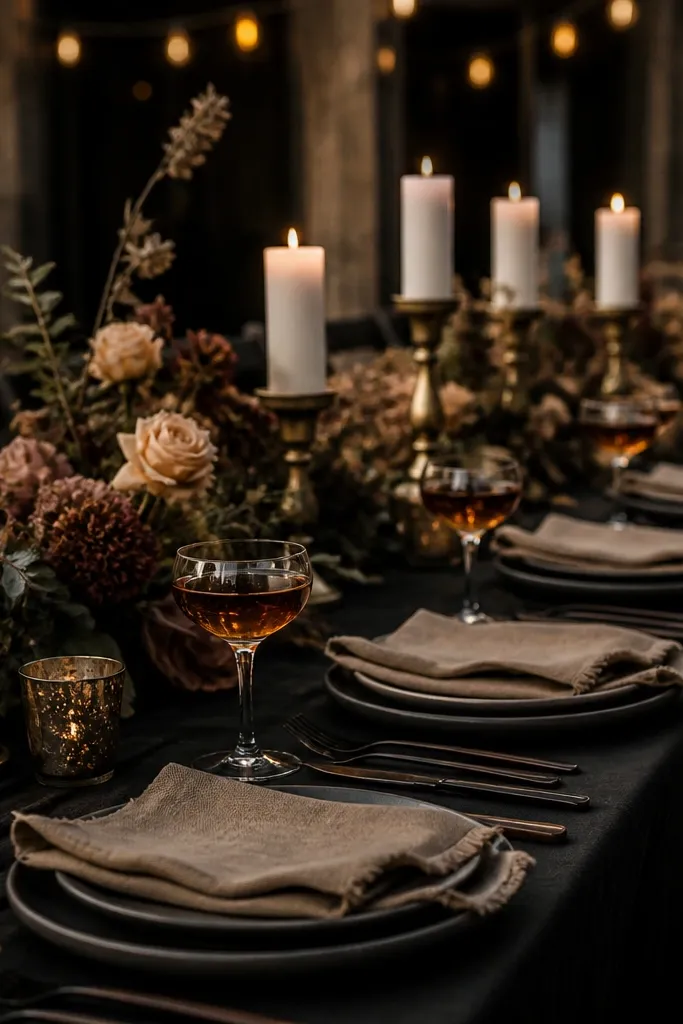
An elevated, antique rustic color palette modeled after historic country estates, leather-bound libraries, and aged botanical manuscripts. Natural tan linen provides an unpretentious, textured canvas that grounds the room. Black-tea-dyed paper goods and deep sepia accents evoke timeless heritage, while burnished gold metalware introduces quiet, candlelit opulence.
Dress banquet tables in neutral tan linen tablecloths with tailored mitered hems. Decorate tables with vintage burnished gold candelabras, accompanied by tea-colored ribbed glass votives. Station black-tea-dyed deckled menus at each setting, hand-lettered with sepia walnut ink. Centerpieces should feature antique toffee roses, dried magnolia leaves, and creamy white spray blossoms.
Hand-dye your stationery in strong brewed black tea over a weekend; the natural variations in parchment staining lend authentic historical gravitas.
Never use optic-white laser-printed paper; stark white paper on a tan linen table destroys the antique, heirloom illusion.
16. Oyster White + Driftwood Gray + Sea Glass Green
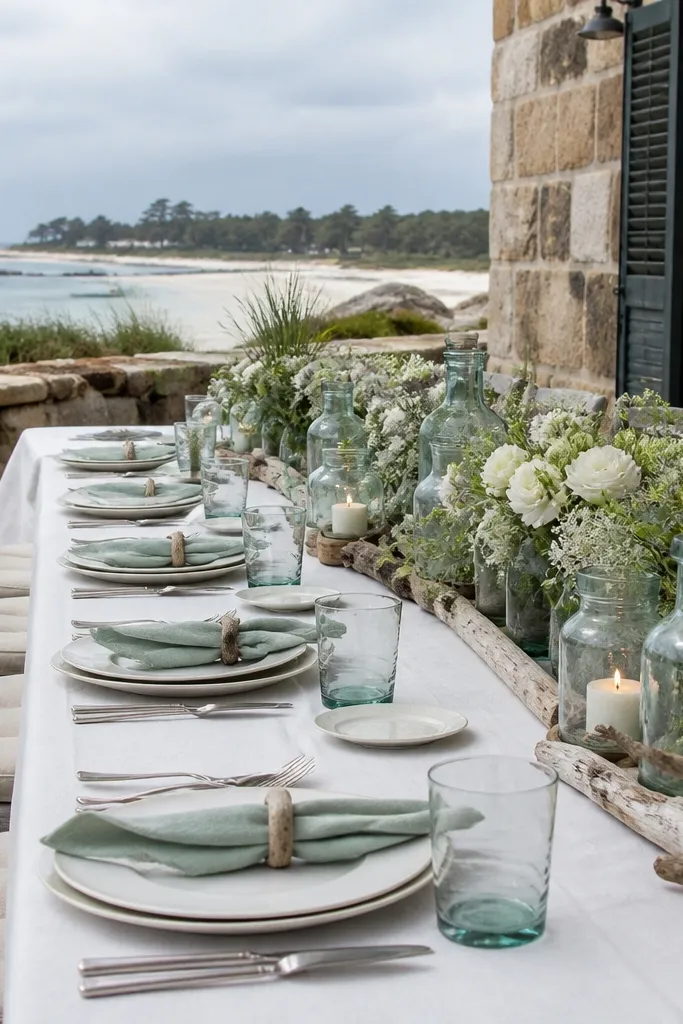
A serene coastal-rustic palette designed for lakeside timber boathouses, riverfront barns, and seaside pavilions. Oyster white provides a softened, luminous foundation that captures water reflections. Driftwood gray offers weathered architectural balance without heavy black tones, while sea glass green brings a translucent, refreshing botanical breath of ocean air.
Quick tipCollect authentic beachcombed driftwood branches to suspend above the head table, weaving in fairy lights and sea glass green ribbons for vertical impact.
Use weathered driftwood gray timber harvest tables left completely bare. Run ethereal oyster white crinkled cotton gauze down the table center. Arrange sea glass green tinted bottles and demijohns filled with sea oats, white ranunculus, eucalyptus, and wild beach thistle. Pair with pale gray ceramic dinner plates and oyster shell salt cellars at each place setting.
Skip thisAvoid pairing sea glass green with saturated navy or nautical primary blues; keep tones muted, hazy, and weathered to preserve the rustic atmosphere.
17. Pale Sage + Honey Yellow + Cream Canvas
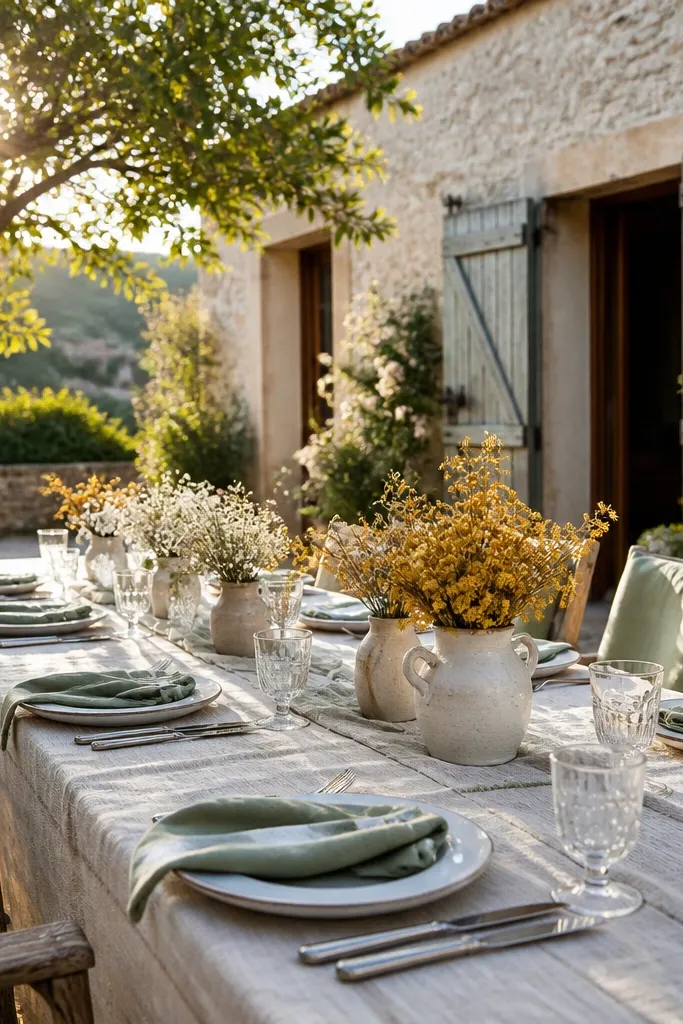
A cheerful, sun-drenched pastoral scheme celebrating agrarian romance, wild apiaries, and golden summer orchards. Cream canvas provides a heavy, durable fabric foundation that diffuses harsh afternoon sunlight. Pale sage leaves keep floral arrangements grounded and fresh, while honey yellow blooms inject sweet, radiant optimism that glows during golden hour.
Cover banquet tables in durable unbleached cream cotton canvas or duck cloth. Style centerpieces using pale sage eucalyptus, olive sprigs, chamomile flowers, and warm honey yellow garden roses or ranunculus in glazed white ceramic pitchers. Place miniature jars of local wildflower honey tied with sage raffia ribbon at each guest’s plate as personalized favors.
Choose warm honey, mustard, or amber yellow floral varieties rather than lemon-lime yellow to maintain an earthy, farm-grown aesthetic.
Do not use cheap yellow organza or polyester ribbons; synthetic yellow fabrics look artificial against natural cream canvas and fresh greenery.
18. Ivory Lace + Forest Green + Espresso Accents
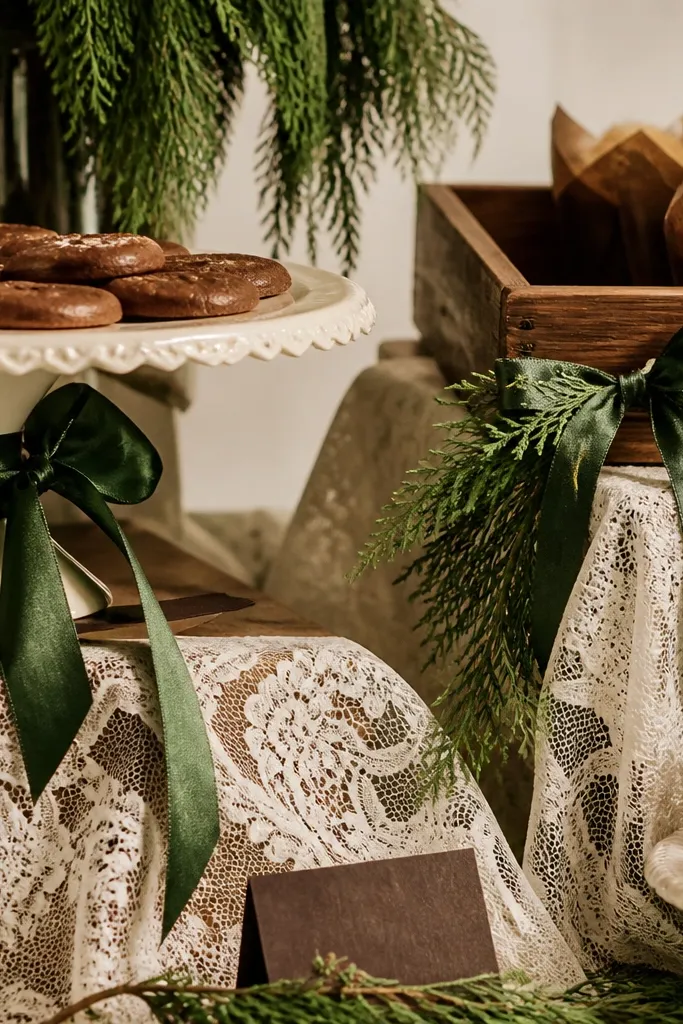
A timeless, moody-rustic classic that pairs Victorian vintage romance with deep woodland grandeur. Rich espresso wood provides a dark, dramatic canvas, while intricate ivory lace overlays soften the timber with heirloom femininity. Deep forest green botanical garlands tie the interior decor directly into the surrounding mature tree canopies.
Place vintage ivory lace table runners directly atop dark espresso stained farm tables, letting the deep wood peek through the lace motifs. Run dense, unbroken forest green garlands down the table length, composed of Italian ruscus, salal leaves, and dark bay laurel. Intersperse tall ivory taper candles in dark espresso wooden turned candlesticks, paired with gold-rimmed vintage glassware.
Layer lace runners only on key feature tables (sweetheart table, cake display, and welcome station) if renting authentic vintage lace for every table exceeds budget.
Never use bright optic white lace; modern synthetic white lace looks overly stark and synthetic against dark espresso timber.
19. Antique Rose + Olive Drab + Cream
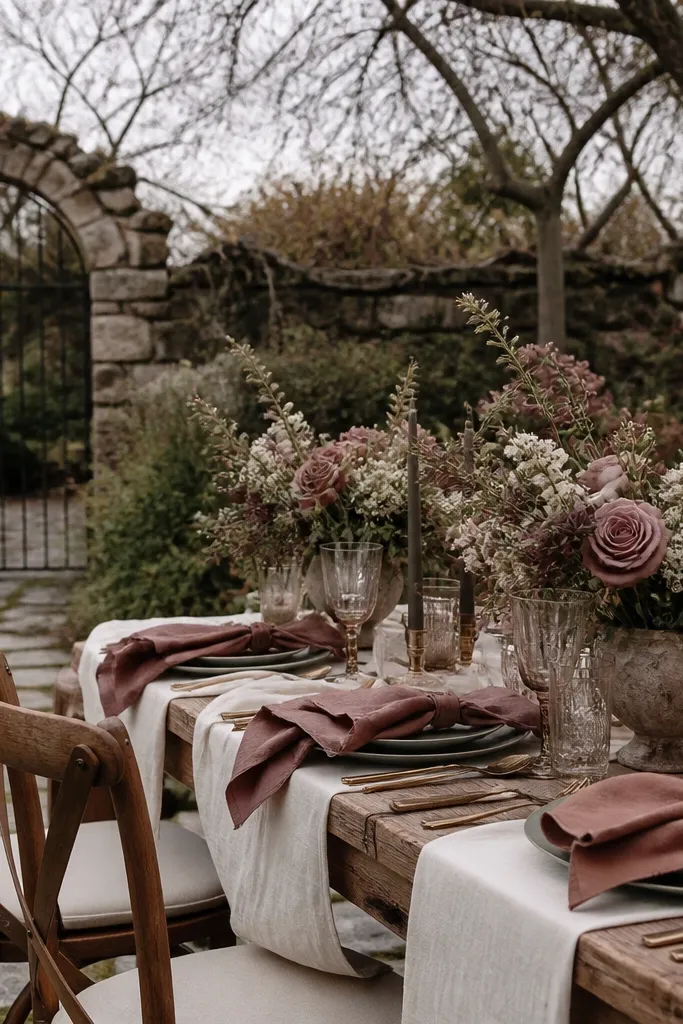
A nuanced, vintage-rustic palette that bridges farmhouse comfort and refined historical elegance. Cream linens ensure the room remains bright, welcoming, and photogenic. Antique rose petals bring romantic vintage blush tones that feel historic rather than trendy, while utilitarian olive drab foliage grounds the setting in relaxed countryside character.
Quick tipMatch your floral undertones to vintage parchment; antique roses should feature slightly dusty, grayish-beige petal edges that photograph like an oil painting.
Lay cream tablecloths with hemstitch detailing across dining tables. Design romantic low compote centerpieces overflowing with antique rose floristry (quicksand roses, dusty mauve carnations, and dried heather) nestled among muted olive drab foliage and seeded eucalyptus. Pair with olive drab linen napkins folded neatly beneath cream ceramic dinnerware.
Skip thisAvoid pairing antique rose with neon coral or vibrant fuchsia; oversaturated pinks overpower the muted, earthy subtlety of olive drab.
20. Cedar + Milky White + Black Walnut
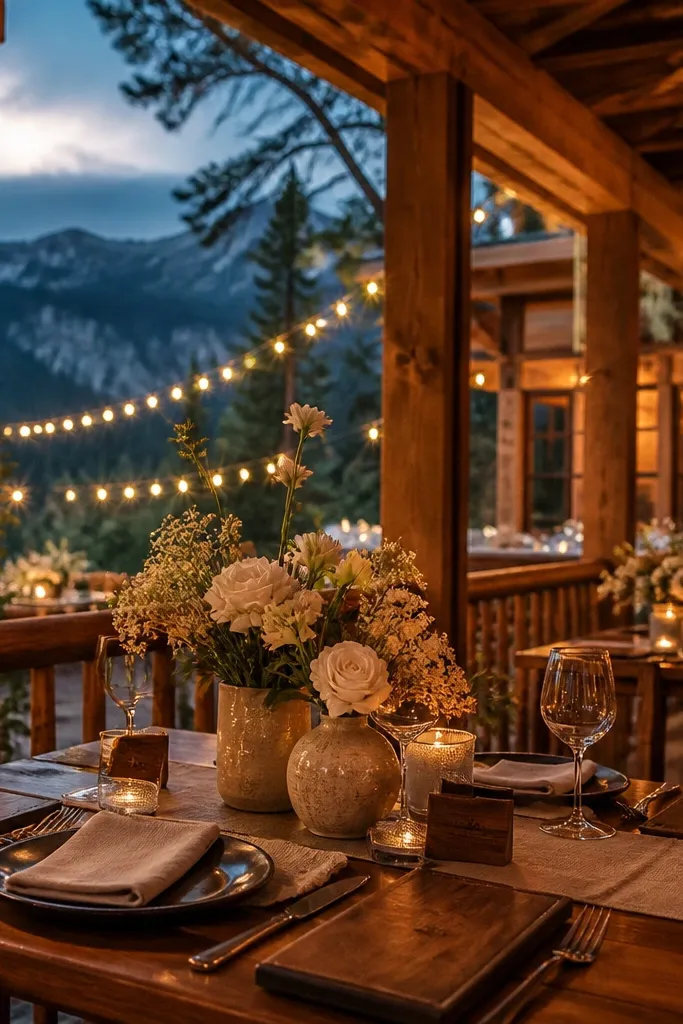
An architectural, lodge-inspired rustic palette capturing the majestic tranquility of alpine mountain retreats. Reddish cedar wood planks and structural beams provide warm, aromatic timber tones, while milky white florals create crisp, luminous contrast that stands out cleanly in dim ambient light. Dark black walnut tabletop accents provide deep visual anchors that lend tailored sophistication.
Feature natural cedar wood farm tables complemented by dark black walnut cross-back dining chairs. Down the center of each table, arrange clusters of milky white ranunculus, white garden roses, and delicate astilbe in dark black walnut turned wooden vessels. Intersperse with smoked charcoal glassware and creamy beeswax tapers held in walnut blocks. Finish with torn milky white handmade place cards.
Embrace the natural fragrance of raw cedar and pine during your setup; the aromatic scent instantly immerses guests into an authentic mountain forest experience.
Do not paint wooden decor white; celebrate the organic grain of cedar and walnut, relying on milky white botanicals and linens to deliver high-contrast brightness.